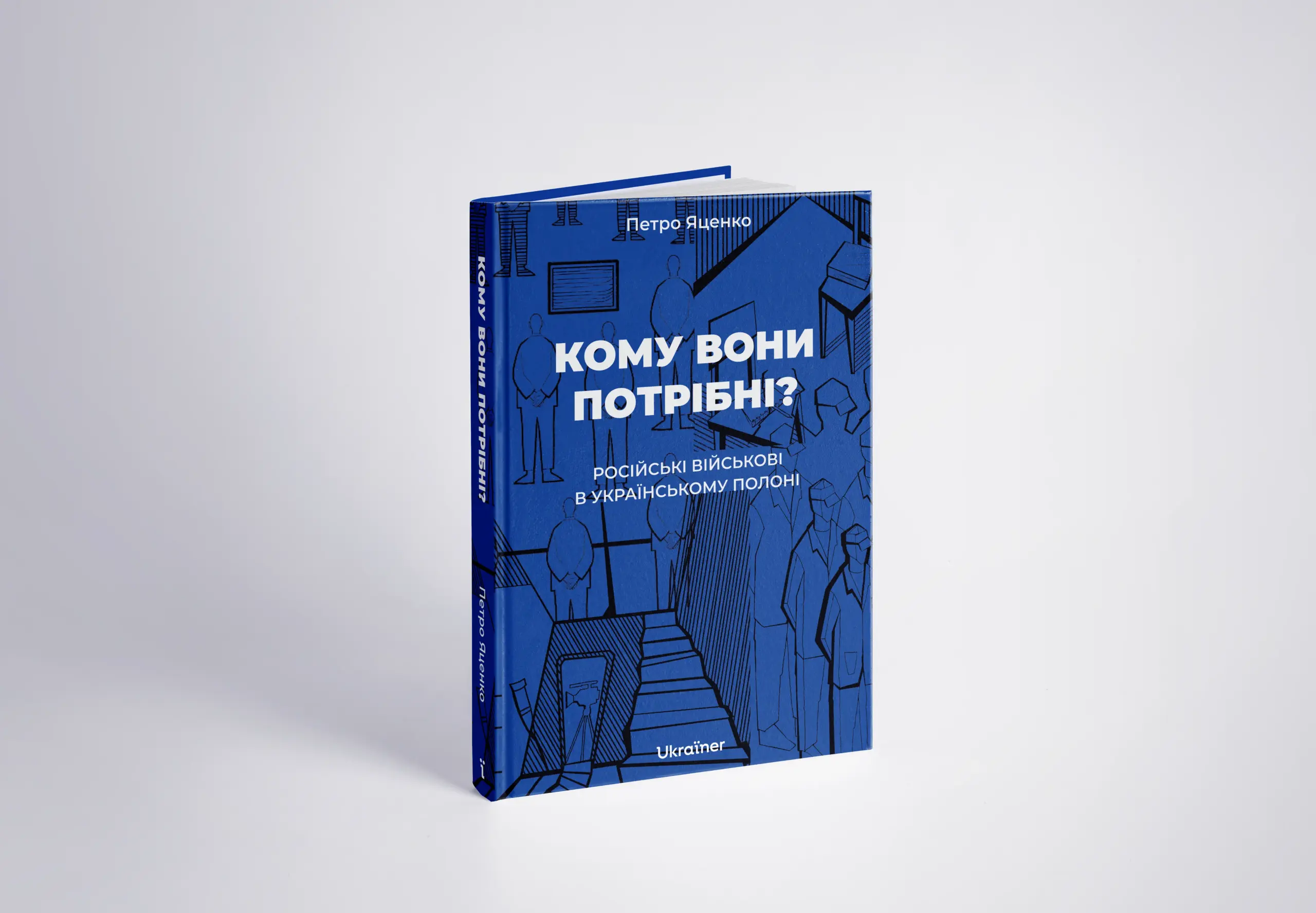
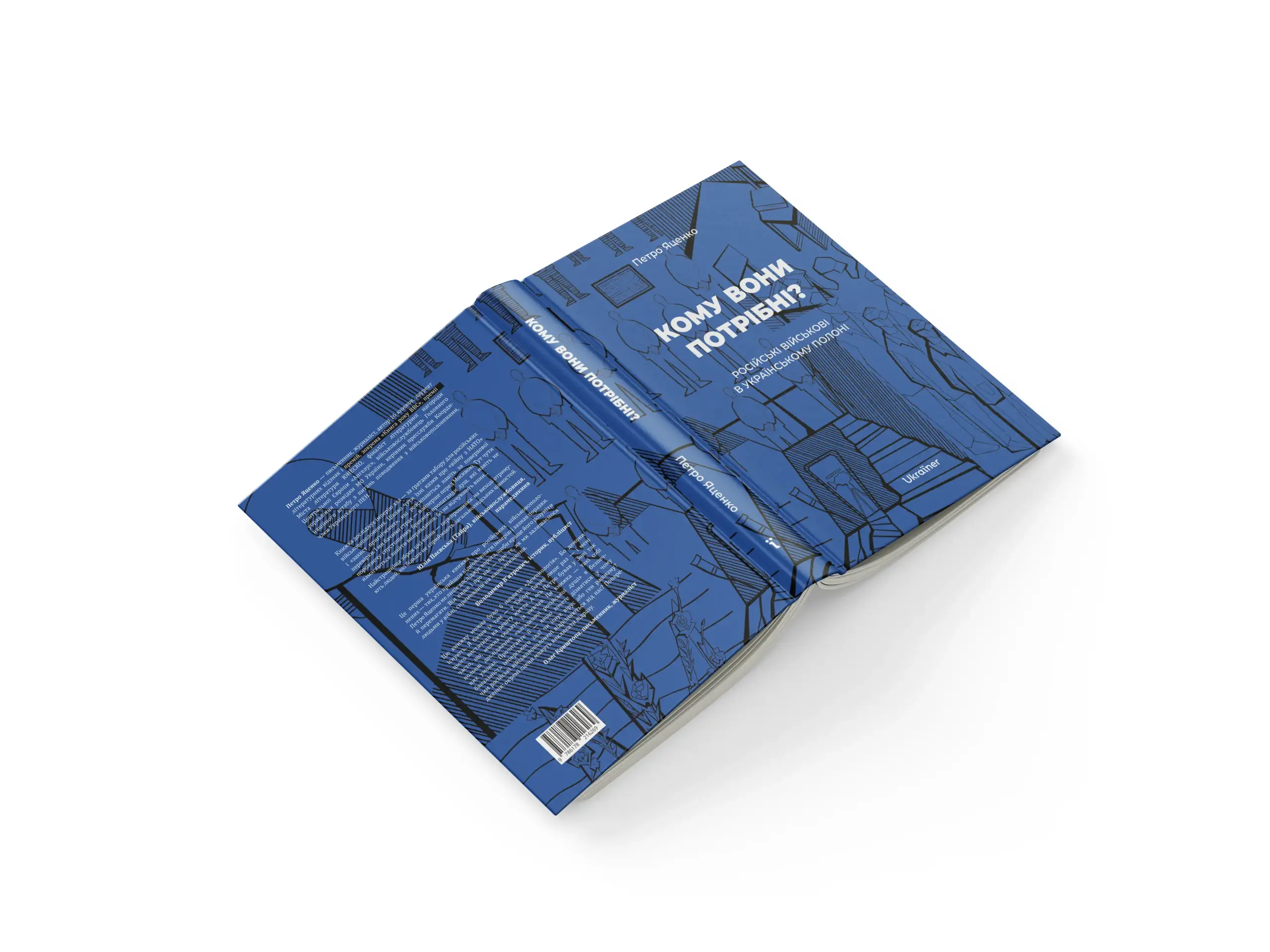
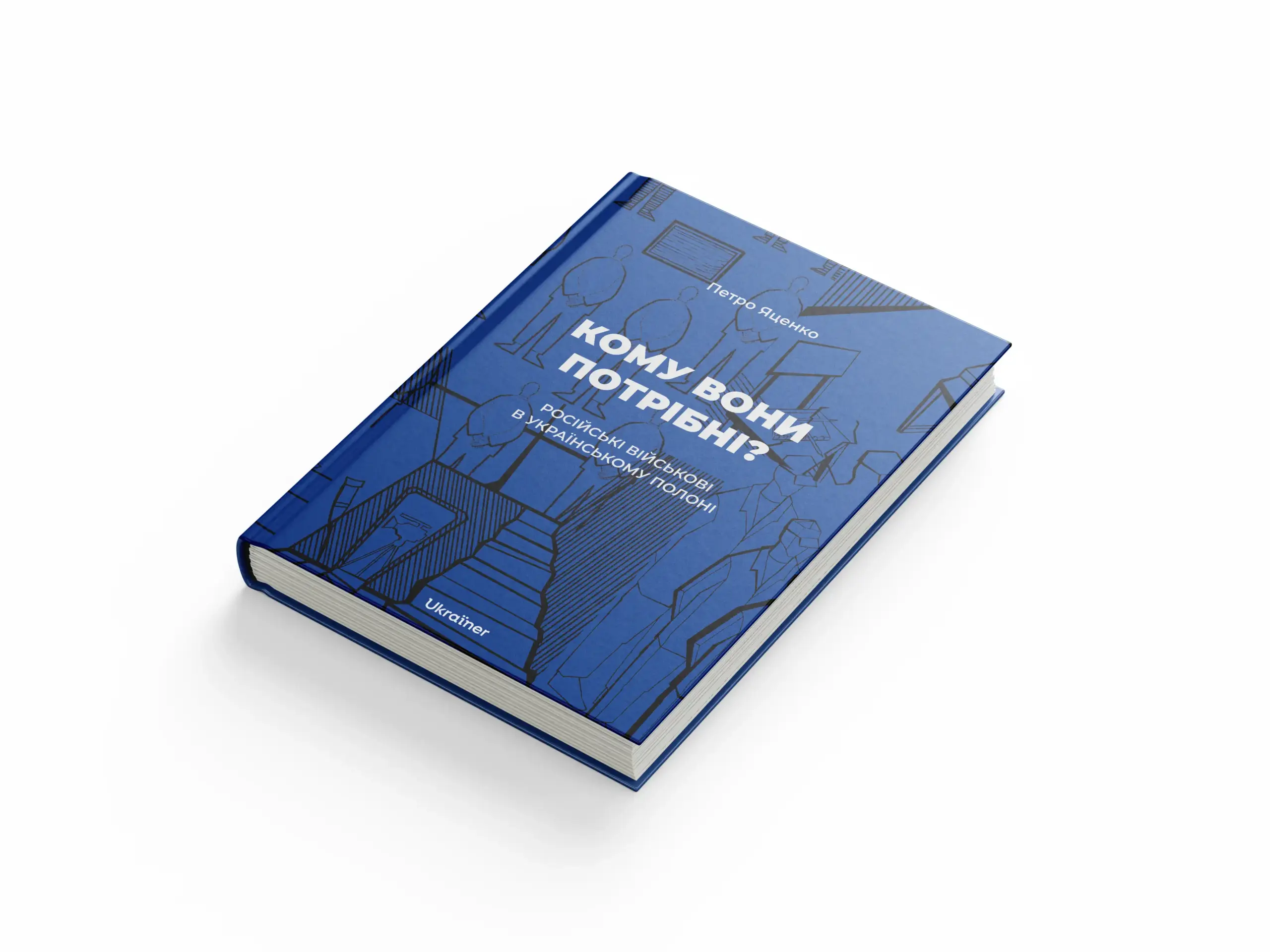


This book of essays about Russian soldiers captured in Ukraine was written by a representative of Ukraine’s Coordination Headquarters for the Treatment of Prisoners of War. Petro Yatsenko made dozens of trips to camps where Russian prisoners of war are held. In the book, he not only documents the camp routine — which is strikingly different from the conditions faced by Ukrainians held in Russia — but also attempts to define the self-identity of the soldiers of the so-called “second army in the world”, their motives, beliefs, and mindset. Beyond his own observations, Yatsenko relies on the insights of psychologists, researchers, and journalists who have communicated with Russian prisoners during the years of Russia’s war against Ukraine. The edition also includes forewords by the writer and public intellectual Olena Stiazhkina and by Maksym Kolesnikov, a veteran of the Russo-Ukrainian War and a psychologist, who spent 321 days in Russian captivity.
This book is an attempt to understand and explain who Ukraine is fighting against and whom it will have to live next to in the future. In addition, it is an attempt to answer the question of why Ukraine holds its enemies in humane conditions, even when dealing with those who, for the most part, deny humanity.
…Just a few weeks ago, some of them were shooting and advancing forward on the orders of their commanders. By surrendering, they have preserved their own lives, but they are anxious because everyone knows that after a prisoner exchange, interrogation awaits them in Moscow.
Petro Yatsenko
author of the book «Кому вони потрібні?»
About the author

Petro Yatsenko is a writer, journalist, engineer, Petro Yatsenko is the laureate of several literary awards and prizes, including the BBC Book of the Year, the UNESCO City of Literature Award, finalist for the Angelus Central European Literature Award. He is a servicemember of the Main Directorate of Intelligence of the Ministry of Defence of Ukraine, head of the press service of the Coordination Headquarters for the Treatment of Prisoners of War, and a member of PEN Ukraine.
Reviews
This edition is the first in the Russian Studies book series, launched to examine and interpret Russia and Russian influence through a Ukrainian lens, as well as through the perspectives of other peoples once colonized by Russia.
The book explores the empire of evil through the bars of a camp for Russian prisoners of war. It is interesting to hear their fairy tales about “a war with NATO” and “protecting the oppressed”, which crumble even upon superficial verification. And we see fear — primarily of Moscow. Here, one hears the emptiness of souls devastated by the lies of propaganda, who do not even try to find justification because they feel no guilt…
Yuliia Paievska (Taira), servicewoman, paramedic
This is an exploration of the mechanism that possesses the mastery of soul-stealing. The most terrifying weapon of this war is not engineering technologies or classic scrap metal, but primarily a re-programming mechanism, where the output is people who no longer perceive universal human values.

This is the first Ukrainian book about Russian prisoners of war — those who came to restore the empire and suffered defeat. Petro Yatsenko not only researches the enemy to better understand and defeat him. He writes about us, too — about how we remain human in a war aimed at our destruction.
Volodymyr Viatrovych, historian, publisher

This book could have been titled “Demonology”. Because demons exist. I saw them there — in a camp, the location of which cannot be spoken. I saw them only once — and that was enough for the rest of my life. Petro Yatsenko visited the Zone so often that, one could say, he studied them. This is a sort of field study of the “mysterious Russian soul” in the safe conditions of a POW camp. Read it if you want to know: What is the banality of imperial evil? How do Russian prisoners of war differ from us? Warning: certain scenes may cause revulsion.
Oleh Kryshtopa, writer and journalist

Supported by