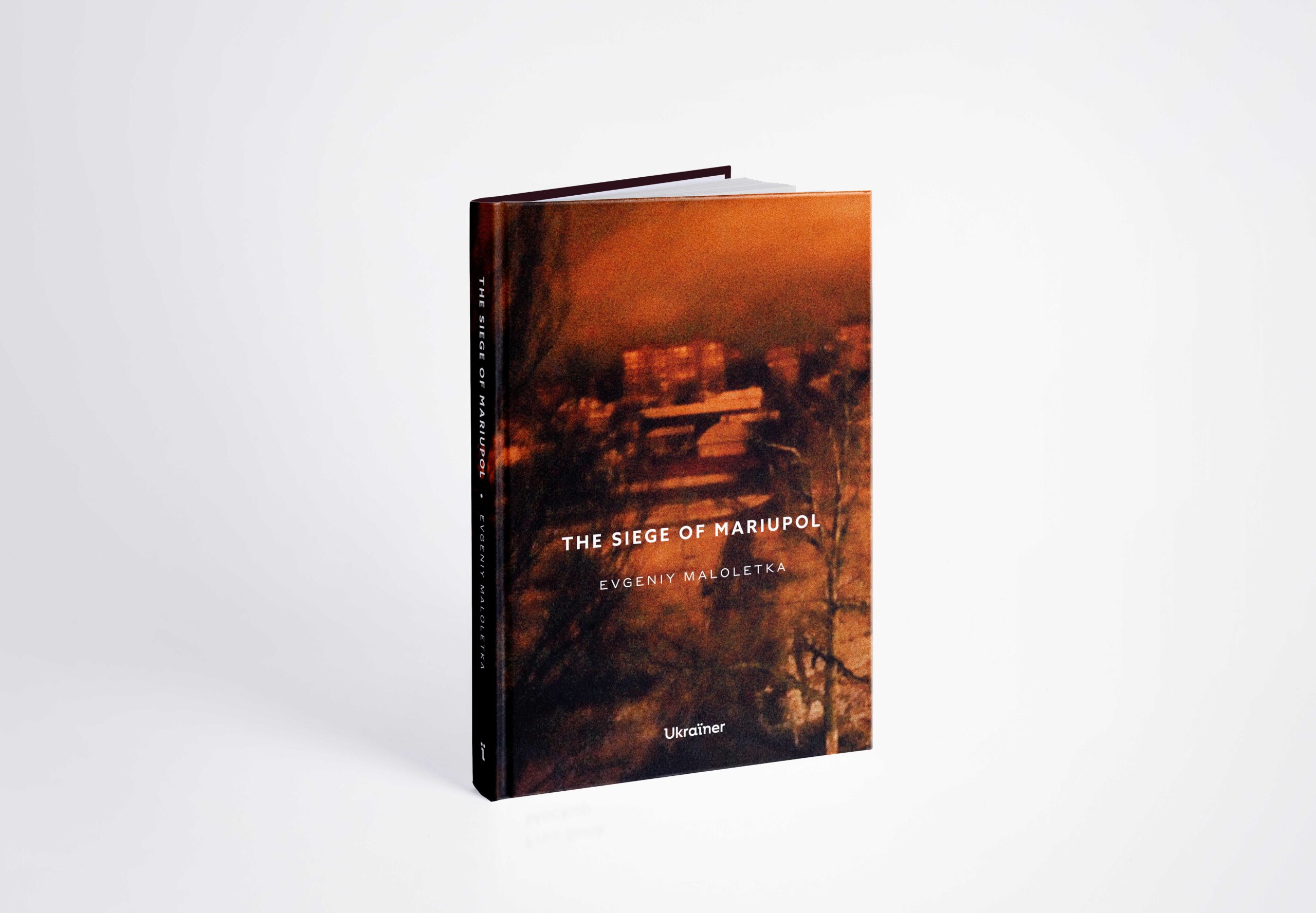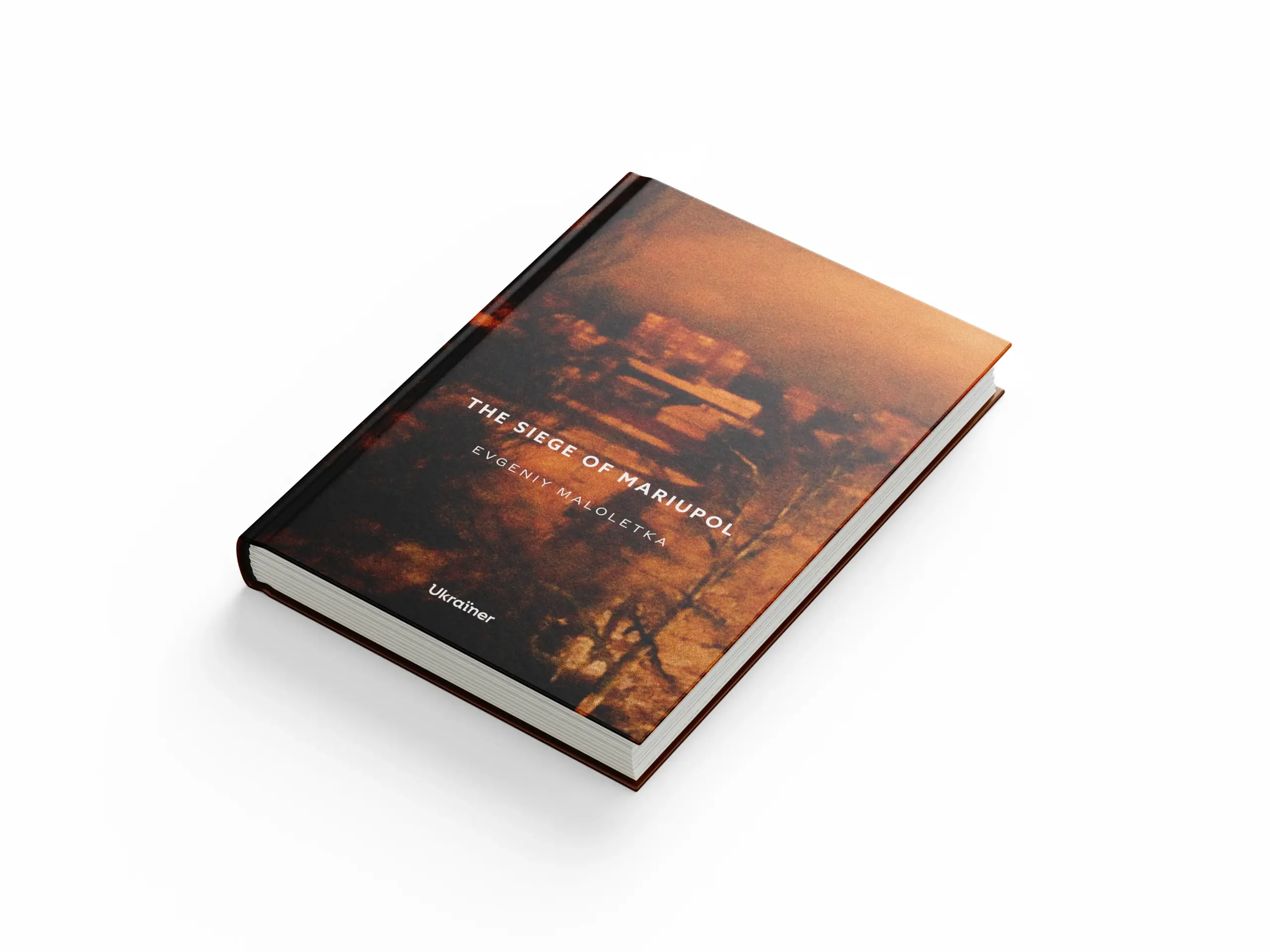


You know this story — the whole world does. It’s the story of the siege of Mariupol, one of the first cities to fall victim to Russia at the start of its full-scale invasion of Ukraine. You learned about it thanks to the journalists who chose to stay in the city during those first 20 days, documenting the horror unfolding on the streets, in basements, and in hospital wards.
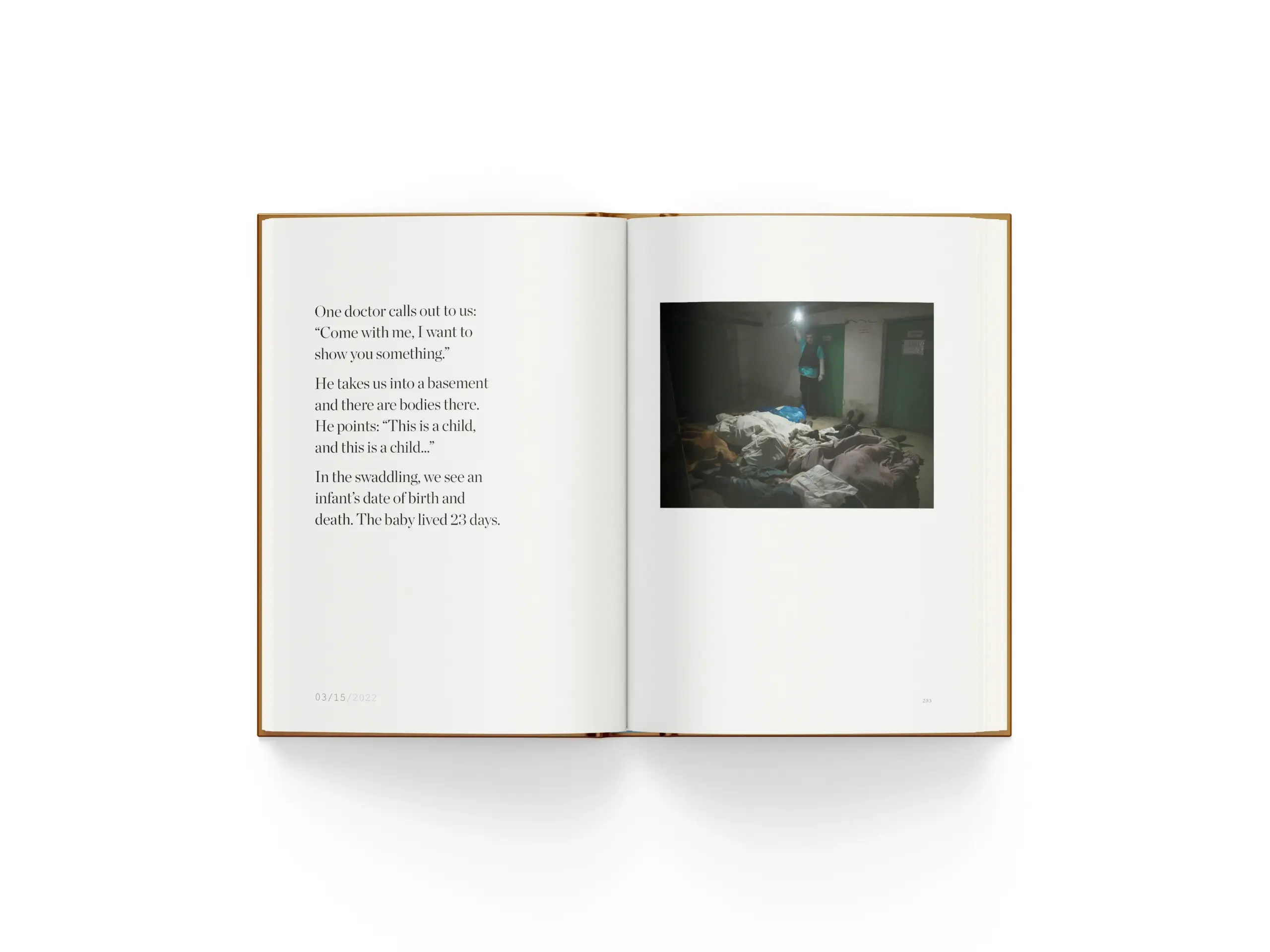
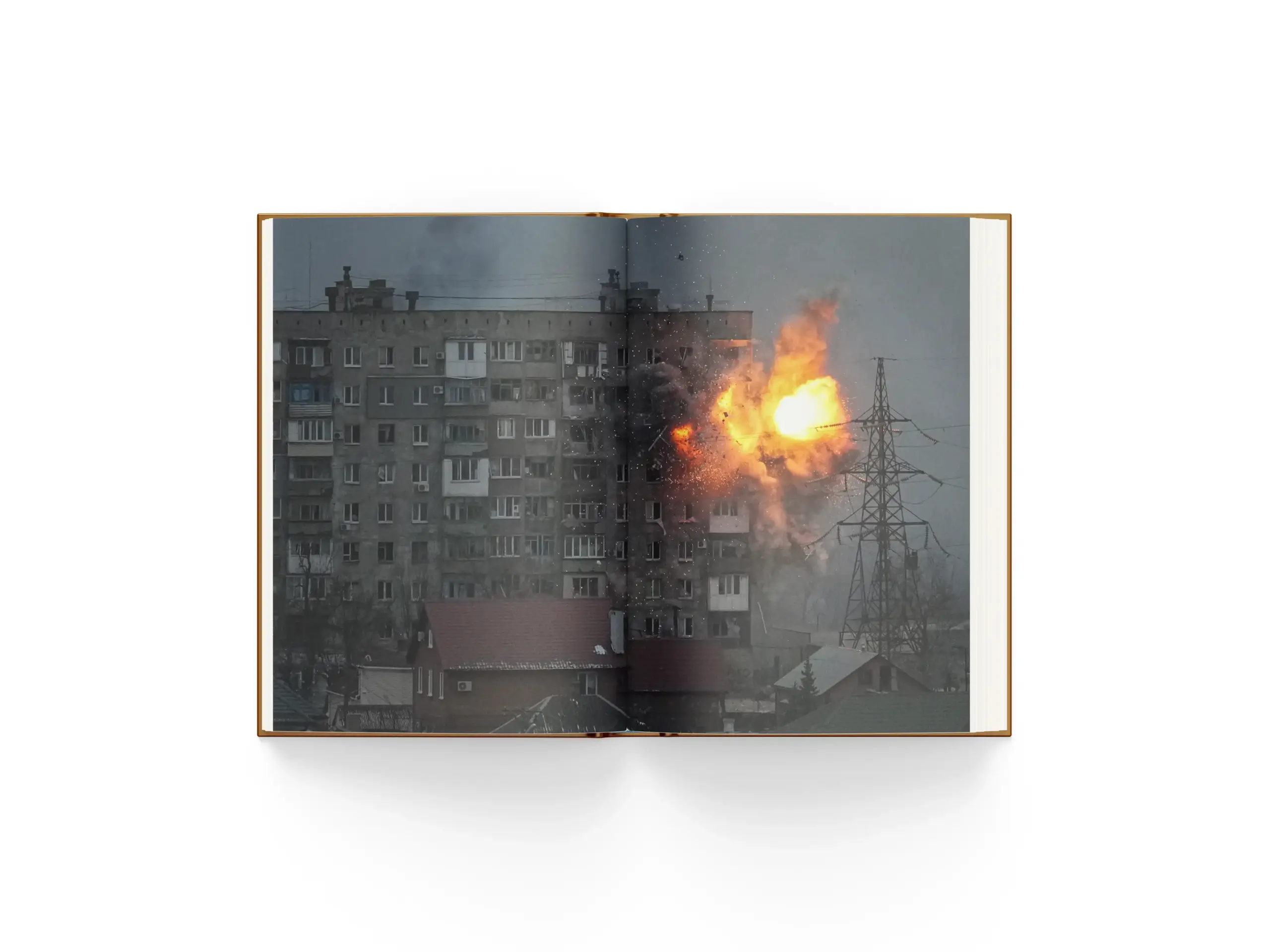
Evgeniy Maloletka was among those photographing tank strikes on residential buildings, the births and deaths of children, and moments beyond what any human being should ever be made to witness, capturing one of the most haunting chapters of modern history.
This book is about people and about a journalist’s responsibility: to tell their truth and to stay connected to it. It’s also about what it means to be in the moment, when the city is surrounded and an invading force is searching for you; what it means to press the shutter when a father weeps over his dead son; what it means to see the unimaginable and keep the camera steady.
About the authors

Evgeniy Maloletka
A photojournalist who has been documenting the war in Ukraine since 2014. He is a two-time Pulitzer Prize winner (2023) in Public Service and Breaking News Photography, and the recipient of the World Press Photo: Photo of the Year (2023) for his image from the Mariupol maternity hospital. His work has also been recognised with numerous other international awards.

Myroslav Laiuk
A writer and war documentarian, and a lecturer at the Kyiv-Mohyla Academy. He is the author of several novels and poetry collections, including Baborniа, Iron Water, Osote!, and Metrophobia, as well as the nonfiction books The Lists and Bakhmut. His book Bakhmut received the Yuri Shevelyov Prize (2024) and was shortlisted for the BBC Book of the Year (2024) and The Peterson Literary Prize (2024).
Reviews
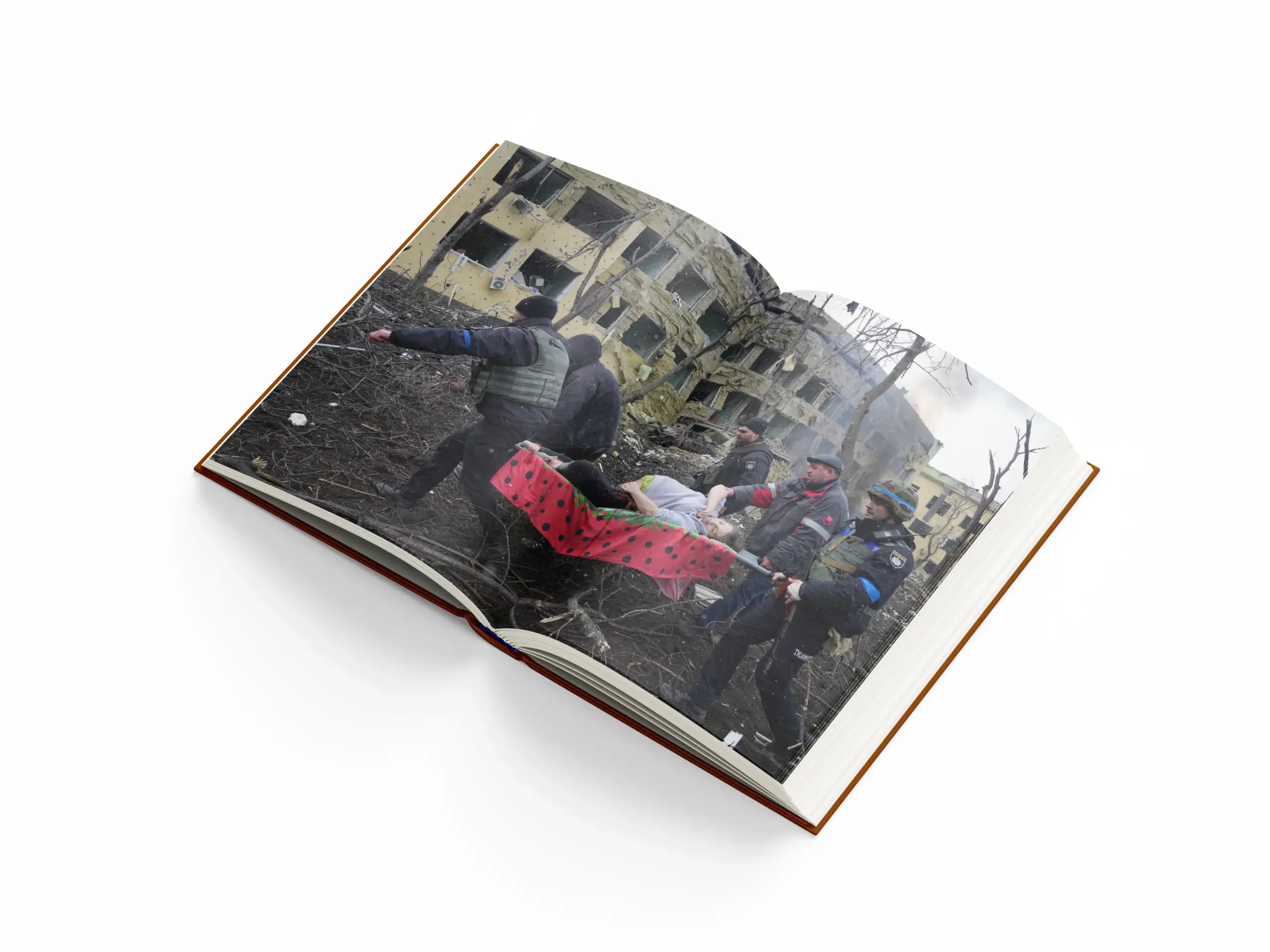
For a single photograph to be so powerful that it not only records history, but alters the course of history, is extremely rare. Evgeniy Maloletka’s image of a woman, about to give birth, being rushed away on a stretcher from the Russian bombing of a maternity hospital in Mariupol, is such a photograph.
James Nachtwey, American Photojournalist, Laureate of the Robert Capa Gold Medal and World Press Photo of the Year
At the time, Russian propaganda was trying to convince the world that civilians were not under attack, and international political leaders were debating how much assistance should be offered to Ukraine. But the truth contained in that one picture obliterated Russia’s entire campaign of falsehoods; it galvanized the political will and gave courage to the collective conscience of the world. And the gates for assistance to Ukraine opened much wider.
The impact of Evgeniy’s photograph was overwhelming, and it was instantaneous. But he did not stop there. At great personal risk, he and his colleague, Mstyslav Chernov, continued to document and report from within the hospital as Russian forces drew ever closer to overrunning the defenders of Mariupol. Only at the last moment were they barely able to make their way through the Russian lines.
Evgeniy’s photographs during those harrowing weeks will stand as one of the most powerful visual documents of war ever created. The level of destruction, cruelty and outright inhumanity he documented seem almost unbelievable. Yet the truth in the images is as undeniable as the empathy we feel for the people in them.
The raw power of Evgeniy’s pictures was inherent in the circumstances themselves, but his ability to use the language of photography with subtlety, complexity and nuance, raises the photographs to the level of art — not for the sake of aesthetics, but to more eloquently and powerfully inform and inspire, to provoke both outrage and compassion.
He’s still there, doing his job, putting himself in harm’s way every day. His dedication to his craft is strong. His love for his country, unbreakable.
I met Evgeniy Maloletka at the premiere of 20 Days in Mariupol and was instantly humbled. Few of us could ever match the courage he, Mstyslav Chernov, and Vasilisa Stepanenko showed by staying in a scorched, imploding city when every other reporter had fled.
Christo Grozev, Investigative Journalist and Author, Bellingcat
In The Siege of Mariupol, we are granted something only an exceptional photojournalist with an unerring eye for the essential could deliver. Evgeniy recounts the war’s beginning with a knife-edge clarity that cuts through smoke and moral fog, drawing us into the city’s trembling heart — where life, death, fear, and duty coexist.
“Are you the journalist who stayed?” a local asks amid the ruins. He was. And because he stayed, we all bear witness.
The Siege of Mariupol by Evgeniy Maloletka is a powerful, essential collection of images of the siege of Mariupol and the war in Ukraine, from the genesis of the conflict in 2014, to the full-scale invasion in February 2022, to the ensuing months.
Lynsey Addari, American Pulitzer Prize-Winning Photojournalist
With no formal photographic training, Maloletka has become one of the quintessential war photographers of this generation: his images are brave, arresting and informative, and reveal the horrors of the siege of Mariupol in a way no other photographer has captured. Maloletka’s photography and the stories behind the images are fundamental to understanding the war in Ukraine, and the necessity of photojournalism.
Here is war in all its horror and surprising humanity. Here is life, death, and the sheer weirdness of how the stuff of every day co-exists with epic tragedy.
Peter Pomerantsev, Journalist and Author
Through the lens of a journalist’s camera, faces, objects, and moments are captured instantly and precisely. We witness this war, the one Russia launched against us, almost in real time. For years now, day after day, we’ve followed this steady advance of pain and death.
Serhiy Zhadan, Ukrainian Writer and Poet
And yet, even a camera cannot fully convey the despair and hope felt by the person behind it, the one documenting reality, trying to hold onto it through the viewfinder. The journalist, the witness, they, too, need to speak, to tell their story, to comment on their images.
Evgeniy does this simply, honestly, and openly. It hurts to read. But through that pain, a light emerges — the light of eventual return, the light of future life.